



Quick answer
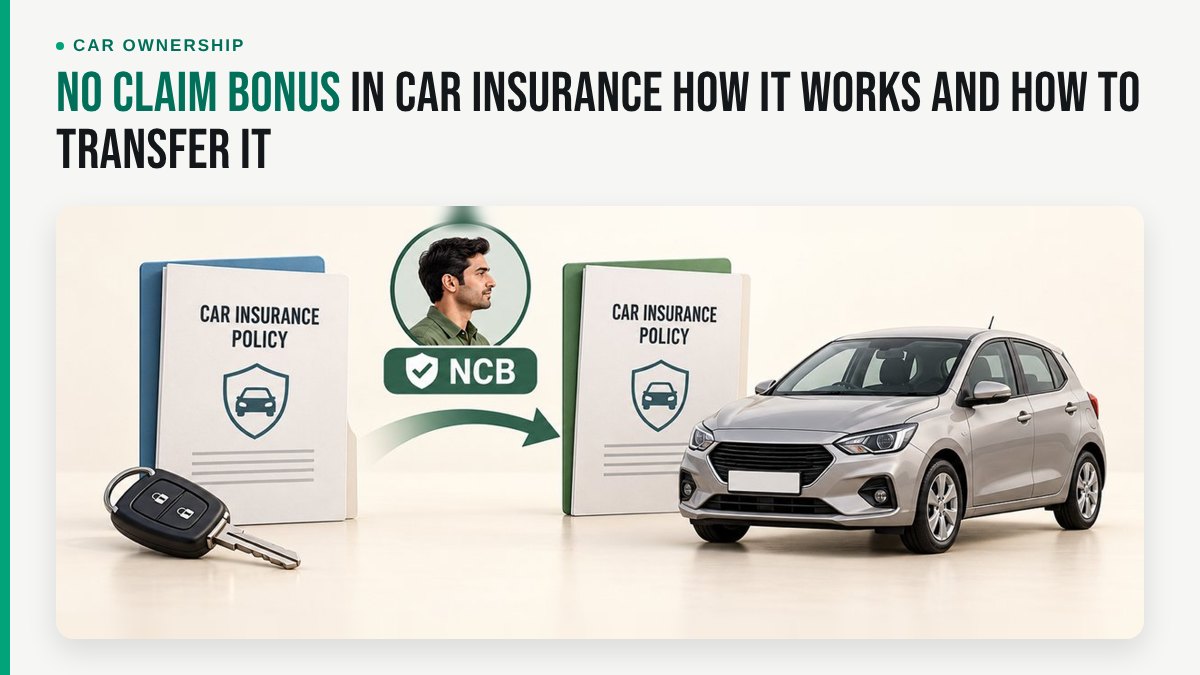
No-claim bonus, or NCB, is an earned benefit on the eligible own-damage premium, not a discount on the entire car insurance bill. It belongs to the insured person rather than the vehicle. You can seek recognition when changing insurers or replacing a car, subject to eligibility, proof and the insurer's process.
Do not pass the seller's NCB to a used-car buyer or claim the same earned benefit on two cars without the insurer's confirmation. Ask for written evidence and check the issued schedule. Accurate disclosure matters more than selecting the highest percentage in an online quote.
What NCB actually reduces
IRDAI's consumer guidance describes NCB as a benefit following claim-free insurance periods and says it applies to own-damage premium, not liability premium. The percentage therefore needs a defined base. It is not simply multiplied by every item on the renewal bill.
Your invoice can contain third-party cover, own-damage premium, add-ons and taxes. Ask the insurer to show the NCB calculation separately. A large earned percentage can still produce a smaller reduction than a buyer expects from the total premium.
NCB also does not mean the insurer guarantees your next renewal will be cheaper overall. Vehicle details, cover choices, pricing and other factors can change. Compare the actual quotation rather than treating the bonus as a promise about next year's full bill.
The familiar claim free scale
The following standard progression appears in New India Assurance's private-car base policy wording. Apply the terms of your own product and verify the eligible history rather than choosing a row based only on the age of the car.
| Preceding consecutive claim-free period | NCB shown in the standard progression |
|---|---|
| One full year | 20% |
| Two consecutive years | 25% |
| Three consecutive years | 35% |
| Four consecutive years | 45% |
| Five consecutive years | 50% |
The years refer to the qualifying insurance record, not just time holding a driving licence. Owning an uninsured car for several years does not establish the same entitlement. A claim or interruption can affect the position under the applicable terms.
Do not assume a five-year-old used car comes with a 50% benefit for its new owner. The seller's history and the buyer's entitlement are different. The insurer must record the correct position for the person being insured.
A premium example with the correct base
Assume the eligible own-damage premium before NCB is ₹10,000 and the verified benefit is 25%. The reduction is ₹2,500, leaving ₹7,500 for that premium component before the other applicable calculations.
Suppose the quote also contains ₹5,000 of other components. Do not calculate 25% of ₹15,000 and claim a ₹3,750 reduction. The example deliberately separates the eligible base from other items. Actual taxes and product calculations need the insurer's quotation.
These figures are illustrative, not a current insurance price. Their purpose is to prevent a common error when comparing renewal offers. Ask for an itemised premium computation if the displayed percentage and discount amount seem inconsistent.
A claim can affect the next renewal
IRDAI's general consumer explanation says lodging a claim affects NCB in the subsequent period. The precise treatment needs to be checked against the policy and any valid NCB-protection endorsement. Do not assume every product handles every situation identically.
If you have a pending or recent claim, disclose it when seeking a quote. A website accepting a percentage does not establish that the history is correct. Ask the insurer how the claim changes the renewal entitlement before paying.
Never hide an accident or withdraw necessary disclosure merely to preserve a discount. If you are deciding whether to claim for a minor admissible repair, compare the amount payable, deductibles and possible renewal effect honestly. Keep safety-related repairs separate from that financial choice.
Changing insurer does not automatically erase NCB
IRDAI confirms that earned NCB can be recognised when changing insurers at renewal. Its guidance identifies renewal notices and other evidence of the prior policy and claim history as useful proof. The new insurer needs accurate information, not only your estimate.
Ask the new insurer which documents it requires. Provide the expiring schedule, renewal notice or confirmation from the previous insurer as requested. Resolve a disputed claim record before relying on the quoted benefit.
After issue, check the NCB percentage and vehicle details in the new schedule. A sales conversation is not enough if the final document records a different figure. Retain the proof used so that any later question can be answered clearly.
Selling your car does not sell your NCB
The insurance policy and ownership record need the appropriate changes when a vehicle is sold. The seller's personal NCB is not a feature of the car like its tyres or service history. It should not be advertised as a benefit that automatically passes to the buyer.
IRDAI states that the buyer may need to pay the difference arising from the seller's NCB for the remaining policy period. Ask the insurer to calculate and document the position. Do not assume an existing premium receipt means no adjustment is needed.
The seller should request the documents needed to retain or use the earned entitlement. Complete the vehicle and policy transfer steps separately. Keeping a bonus record does not complete registration transfer, and transferring the registration does not alone settle every insurance change.
Replacing a car needs a documented transfer request
Tell the insurer that you are selling or replacing the old vehicle and ask for its NCB-retention or transfer procedure. Explain the intended purchase and timing. Different transaction sequences can require different documents or endorsements.
The replacement insurer may ask for evidence of the old policy, earned benefit and sale or cancellation-related changes. Obtain a written list. Do not assume every insurer uses exactly the same certificate name or accepts the same screenshot.
Check the validity and conditions of any retention document. If you are not buying immediately, record the deadline stated by the insurer. Avoid using a remembered internet rule as a substitute for the actual document issued to you.
Do not apply one entitlement to two active cars casually
Keeping the old car while buying another is not necessarily the same as replacing it. You should not simply select the old car's bonus on both quotes. Ask the insurer how entitlement and any required withdrawal or adjustment should be handled.
If the new vehicle is being insured in another family member's name, do not assume the benefit transfers within the household. The insured identity matters. Have the insurer confirm any exceptional situation rather than treating a shared address as sufficient.
The same caution applies to changes involving an employer, a company or another ownership arrangement. Request vehicle-specific guidance with the correct named insured. A low quote based on the wrong entitlement can create a problem later.
Keep a small transfer document checklist
| Situation | Evidence to discuss with the insurer | Check after the change |
|---|---|---|
| Renewal with a new insurer | Expiring schedule and earned-history proof | Correct percentage and policy dates |
| Sale of the old car | Sale and policy-change documents | Seller benefit separated from buyer cover |
| Replacement purchase | Retention or transfer confirmation | Correct named insured and vehicle |
| Delayed replacement | Certificate conditions and expiry | Entitlement still valid when used |
| Recent or pending claim | Claim reference and status | Revised eligibility accurately recorded |
This is a preparation list, not a universal set of legally sufficient documents. Follow the insurer's actual requirements and retain the final endorsements.
Do not let the policy lapse while arranging the change
Renewal timing and interruptions can affect both insurance protection and bonus eligibility. Keep the current policy's expiry date visible and ask about the process early. Do not drive without required insurance while waiting for a transfer letter.
If a policy has already expired, tell the insurer the exact dates and ask what is needed. Inspection and eligibility conditions can apply. Do not backdate a claim-free declaration or assume a late payment creates uninterrupted cover.
An NCB record does not replace an active policy. Even if a bonus can be retained for a later purchase, the vehicle you currently use still needs the required cover. Keep those two responsibilities separate.
NCB protection is an add on with conditions
Some insurers offer NCB-protection products. They can preserve specified benefits after certain claims, but their limits and permitted events differ. The name should not be interpreted as unlimited protection after every possible incident.
Read the claim count, qualifying events and renewal conditions. Ask whether the benefit continues if you move to another insurer. Do not assume buying the endorsement changes your factual claim history or removes the duty to disclose it.
Compare its additional premium with the benefit it can protect. It is separate from zero-depreciation cover, which addresses specified repair deductions. A policy may offer both, one or neither, depending on eligibility and selected options.
Questions about NCB transfer
Can I transfer NCB when I change insurers
You can seek recognition of the earned benefit with the required evidence and accurate claim disclosure. Check the new schedule after issue. Do not assume a quoted percentage has been verified simply because payment succeeded.
Does the used car buyer receive my NCB
No. NCB belongs to the insured person rather than the car. The buyer needs the correct insurance arrangement and any premium adjustment confirmed by the insurer.
Is NCB a discount on third party premium
No. IRDAI's guidance distinguishes the own-damage benefit from liability premium. Ask for the premium breakdown rather than applying the percentage to the whole bill.
Can I use the same NCB on two cars
Do not do so without the insurer's explicit confirmation of the applicable arrangement. Replacing a car and retaining two vehicles are different situations. Get the required changes documented.
Should I avoid a necessary repair to keep NCB
No. Safety and proper repairs come first. For a small admissible claim, you can compare costs and the bonus effect, but do not hide information or leave a vehicle unsafe to preserve a discount.
Confirm entitlement before renewal or replacement
Ask your current insurer for written evidence of earned NCB and the steps for your transaction. Share the correct claim history with the receiving insurer, then verify the issued schedule and endorsements. Keep the documents with your sale, purchase and renewal records.