



Quick answer
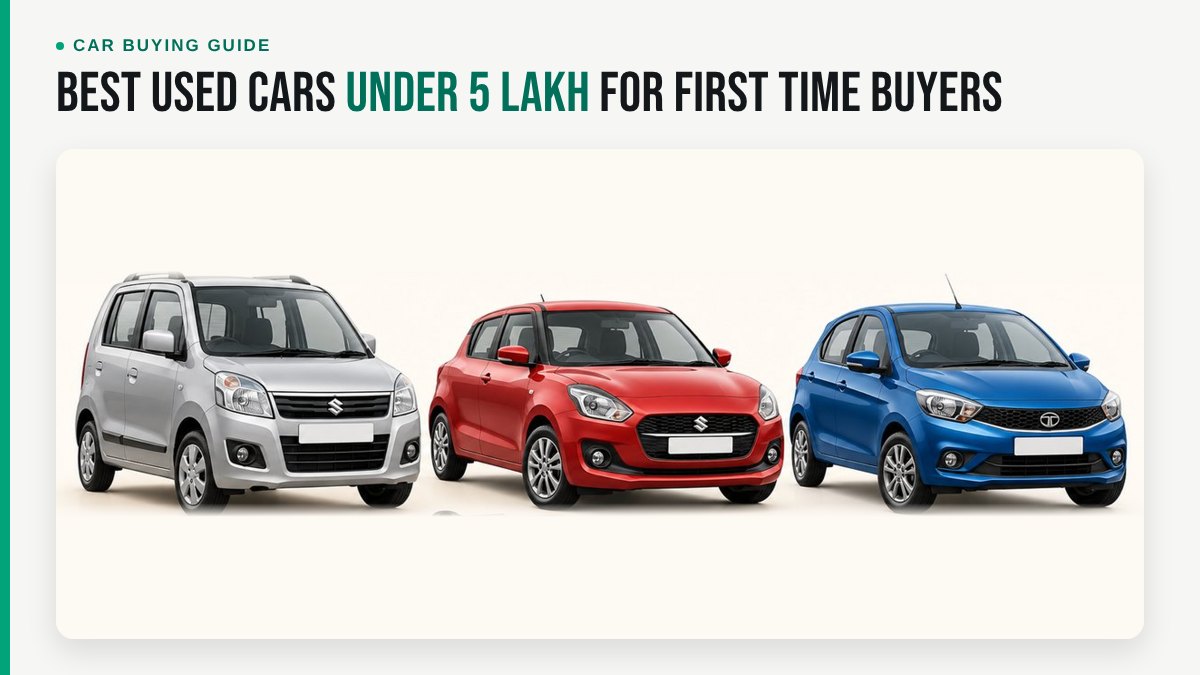
For a first car below ₹5 lakh, start with a petrol hatchback that has verifiable servicing, suitable safety equipment and a clean independent inspection. An Alto, WagonR, Swift, Grand i10 or Tiago can be a sensible inspection shortlist. None is automatically a good purchase simply because its badge is popular.
Treat ₹5 lakh as your complete spending limit if that is all you can afford. Keep money aside for insurance, transfer expenses and necessary repairs. Choose the healthiest suitable example rather than the largest car available at the advertised price.
This is a buying shortlist, not a live stock catalogue. Availability, age, gearbox, condition and local asking prices change. Check comparable cars in your city before assuming that a particular year or variant fits the budget.
Decide what your first car must do
Write down your normal passengers, parking space and weekly journeys. A small hatchback may suit one person travelling to work, while regular rear-seat passengers need a proper seating trial. Carry the child seat or mobility aid you actually use when checking space.
Decide whether a manual is acceptable before viewing cars. A cheaper manual will not meet your needs if clutch operation is difficult on your daily route. Conversely, an automatic with uncertain maintenance can leave too little money for repairs.
Set minimum equipment requirements. Check the actual car for airbags, ABS, working seat belts and suitable child restraint provisions where needed. Equipment varies by manufacturing period and trim. A recent brochure cannot confirm what an older example contains.
Build a shortlist around use
| Model to inspect | Why it may suit a first buyer | Main check before choosing |
|---|---|---|
| Maruti Suzuki Alto | Small footprint for local journeys | Space, equipment and maintenance record |
| Maruti Suzuki WagonR | Practical shape for everyday passengers | Exact generation and condition |
| Maruti Suzuki Swift | Alternative for mixed city and longer use | Accident history and modification quality |
| Hyundai Grand i10 | Another hatchback worth a seating trial | Service evidence and repair estimates |
| Tata Tiago | Alternative to compare on equipment and fit | Variant details and mechanical inspection |
These are models to compare, not a ranking based on an invented road test. Inspect two or three examples of your preferred model if possible. That helps separate the car's normal behaviour from a fault in one vehicle.
Do not reject a well-maintained lower trim solely because another car offers a screen or alloy wheels. Consumables, repairs and ownership records matter more than accessories that look attractive in photographs.
Alto for a smaller everyday car
An Alto belongs on the list when parking space and modest daily transport are the main requirements. Check whether the seating position, visibility and luggage space work for your household. A short solo drive cannot answer those questions for a family.
Compare the specific older Alto or Alto K10 being offered rather than treating the names as one specification. Ask for the original variant details and manufacturing date. Verify safety equipment on the vehicle and against the correct period documentation.
During inspection, pay attention to cooling performance, clutch operation and evidence of neglected maintenance. Ask the workshop to price any work it finds. A small car can still be a poor purchase if its repair needs consume your reserve.
WagonR for a practical seating trial
A WagonR is worth viewing when easy entry and everyday passenger space matter. Sit in the back with the front seat adjusted for the usual driver. Check headroom, belt access and whether everyone can travel comfortably on the journeys you expect.
Confirm the generation, engine, fuel system and gearbox. Similar-looking listings may describe quite different vehicles. If considering CNG, verify the installation, registration details and applicable inspection records instead of accepting a verbal claim that everything is approved.
Look closely at a car previously used for intensive commercial work. High use is not established by upholstery alone, and a tidy cabin does not prove light use. Let service dates, recorded distances and the inspection support the seller's explanation.
Swift for a wider driving shortlist
A Swift can be included when you want to compare a hatchback for both weekday traffic and longer trips. Choose the exact engine and gearbox only after considering your use and the available maintenance evidence.
Be cautious with modified examples. Ask what changed, who fitted the parts and whether original components are available. Non-standard suspension, wiring or engine alterations need a workshop's assessment; a cosmetic modification can hide a larger expense.
Do not pay extra purely for low displayed kilometres. A coherent service record is more useful than an unsupported number. Inspect wear, repair history and the vehicle's behaviour together before agreeing that a particular example deserves a premium.
Grand i10 and Tiago as alternatives
Inspect a Grand i10 if its seating, controls and overall condition suit you better than the other hatchbacks. Keep the original Grand i10 separate from the Nios when comparing prices and equipment. Names in used listings are not always precise.
Ask for servicing and repair invoices. Try the air conditioner, windows, locks and fitted electronics while parked, then include their repair cost in the decision. Small electrical faults should not be dismissed simply because the engine starts normally.
Include the Tiago in the same condition-led comparison. Check the exact trim, gearbox and manufacturing period. Do not attach a safety score from a different tested version to every older car carrying the name.
With either model, an independent inspection should assess the individual vehicle. A better-equipped but damaged example is not preferable to a sound car merely because the feature list is longer.
Keep a repair reserve inside the budget
Here is an illustrative allocation, not a market quotation. A ₹4.35 lakh purchase leaves ₹65,000 from a ₹5 lakh limit for transfer-related spending, insurance and initial work. Whether that reserve is enough depends on actual quotes and the inspection.
Get estimates for tyres, battery, brakes, fluids and any identified mechanical repair. Avoid counting a seller's assurance that the car needs nothing as a substitute for those estimates. Ask which work is necessary before regular use and which can wait.
If financing the purchase, compare the complete amount payable and fees. Keep the monthly running budget separate from the deposit. A purchase that uses all available cash can become difficult even without a major mechanical failure.
Inspect before negotiating the final amount
Arrange the inspection in daylight and ask to see a cold start when practical. Let a qualified technician check mechanical condition, structural repair signs, diagnostics and underbody damage. Do not crawl beneath a vehicle supported only by its emergency jack.
Take a permitted test drive that includes normal traffic, braking and reversing. Check warning lamps and whether the vehicle tracks and shifts normally. Stop the assessment if it appears unsafe rather than attempting to reproduce a fault at speed.
Photograph identified defects with permission and request a written estimate. Use that evidence in negotiation. A seller who refuses a reasonable independent inspection gives you a clear reason to consider another car.
Match the seller and the documents
Check the registration certificate against the seller's identity and the vehicle identification details. Ask about finance, insurance, pending obligations and the documents required by the registering authority. Do not rely on a registration screenshot alone.
Parivahan identifies Form 29 for the seller's transfer report and Form 30 for the buyer's ownership transfer application. Requirements and supporting documents depend on the case. Use the applicable official service rather than assuming a signed sale receipt completes the transfer.
Agree in writing who will submit the application and how you will confirm completion. Keep payment records and a dated handover record. Ask the insurer about the correct policy transfer or replacement process before driving away.
Understand a certified seller's promise
A certified programme can provide useful inspection and warranty documents, but read the actual terms. Maruti Suzuki True Value describes a 376-point evaluation and up to one year of warranty for certified cars. That does not mean every used car at every seller has identical cover.
Ask whether your chosen car is certified, what components are covered, where claims are accepted and which maintenance conditions apply. Obtain the certificate and exclusions before paying, particularly if the warranty influences your choice.
An inspection report and a warranty answer different questions. The first describes findings at a point in time; the second sets the seller's obligations if an eligible problem occurs. Neither removes the need to check ownership and suitability.
Choose the car you can support
Before paying a deposit, shortlist three actual vehicles and compare total cost, records and inspection findings in one place. Choose the one that meets your needs without consuming the repair reserve. If none does, widen the search period rather than lowering essential checks.
Ask the seller for a written vehicle description, agreed price, disclosed defects and deposit refund conditions. Avoid an urgent payment simply to stop another buyer seeing the car. A first purchase should leave you with clear documents and a manageable car.
Frequently asked questions
Which used car under 5 lakh is best for a beginner
A sound petrol hatchback with suitable equipment is a useful starting point. Compare an Alto, WagonR, Swift, Grand i10 or Tiago based on the individual car. Condition and clear records should decide the purchase, not a universal badge recommendation.
Should I spend the full 5 lakh on the car
Only if other required expenses are funded separately. Otherwise retain money for insurance, ownership transfer and work identified during inspection. Obtain real estimates before deciding the purchase ceiling.
Is low mileage proof of a better used car
No. Check recorded service distances, dates and the vehicle's condition together. Low displayed kilometres without supporting evidence should not automatically command a higher price.
Is a certified used car always the safer purchase
Certification can add useful checks and contractual cover, but its scope varies. Read the individual report and warranty, confirm paperwork and arrange an independent assessment where possible. Certification is not a promise that every future repair is covered.
Can I buy an older top variant instead of a newer base car
You can compare them, but first check equipment, condition and repair costs. Extra features do not compensate for serious damage, poor records or an unsuitable remaining registration position. Assess both actual vehicles rather than age alone.
Sources and checks
- Parivahan ownership transfer guidance for the ownership transfer forms and process.
- Maruti Suzuki True Value certification for the programme's stated checks and warranty description.
Prices and available stock require a fresh local check before publication. Model suggestions are editorial inspection choices, not verified current listings or first-hand road tests.
Internal links for publication
Link to the guides on checking service history, detecting odometer tampering and identifying accident repairs. Add a used automatic cars under ₹8 lakh link for readers who require clutch-free driving.