



 Get the CarJade App


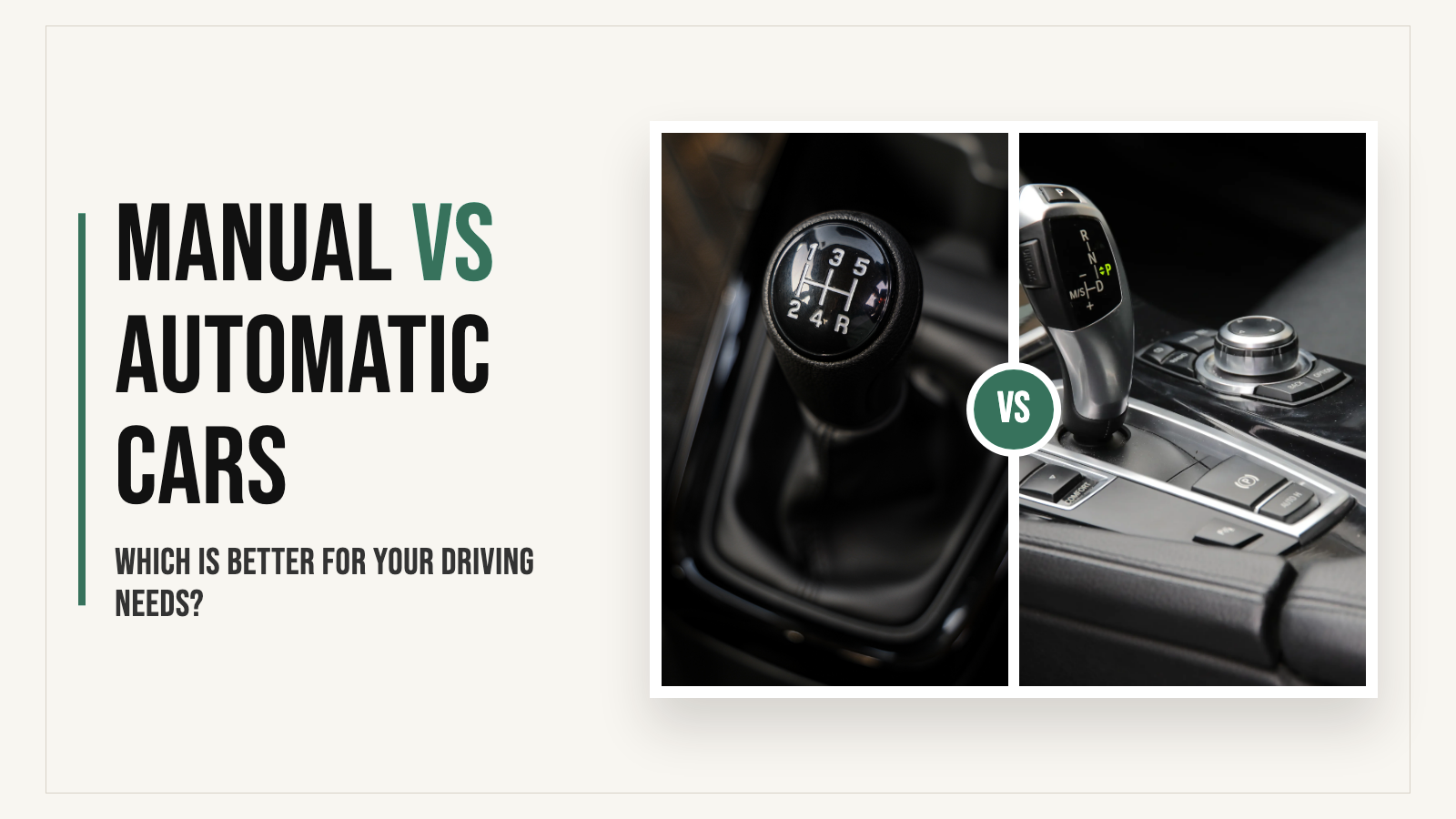
The daily battle with heavily congested traffic has changed the way we buy vehicles in India. Long hours spent dealing with a heavy clutch pedal on the Western Express Highway in Mumbai or crawling through Outer Ring Road traffic in Bengaluru have made comfort a major priority. As a result, two-pedal driving technology has grown from a premium luxury feature into a common household requirement.
However, choosing between an automatic car vs manual car is no longer just about deciding whether you want to shift gears yourself. The market now features multiple distinct types of automatic transmissions, making the choice a little more complex. If you are trying to decide which transmission system deserves a spot in your garage, this practical guide simplifies the entire decision.
The Core Difference: Control vs Convenience
At a basic level, the debate between an automatic vs manual car matches the joy of mechanical control against the ease of relaxed driving.
- Manual Transmissions: This traditional setup gives you a dedicated clutch pedal and a physical gear lever. You decide exactly when to change gears based on engine sound, speed, and the road ahead. It offers an engaging experience, but requires constant physical effort from your left leg and left hand in bumper-to-bumper city traffic.
- Automatic Transmissions: These systems remove the clutch pedal entirely. An onboard computer, hydraulic system, or mechanical pulley setup handles all gear changes automatically. Your left leg remains completely relaxed, allowing you to focus entirely on steering and braking.
The Automatic Battleground: AMT vs CVT
If you decide to step away from a manual gearbox, you will quickly notice that not all automatic cars function the same way. For budget-conscious family buyers and city commuters, the two most common options are AMT and CVT.
AMT (Automated Manual Transmission)
An AMT is essentially a conventional manual gearbox fitted with an electronic brain and robotic actuators. This system operates the clutch and shifts the gears on your behalf.
- The Pros: Because it uses standard manual components under the hood, an AMT adds very little to the car's initial cost (typically a premium of ₹50,000 to ₹70,000). It is highly affordable to maintain and delivers excellent fuel economy that closely matches or sometimes beats a manual version.
- The Cons: Because the computer physically shifts the mechanical gears, there is a distinct pause between shifts. This creates a noticeable "head-nod" or brief jerky sensation, especially if you accelerate aggressively to overtake.
- Best For: First-time car buyers or budget-focused drivers looking for an affordable city commuter.
CVT (Continuously Variable Transmission)
A CVT throws out traditional cogged gears entirely. Instead, it relies on a high-strength steel belt running between two cone-shaped pulleys that continuously alter their width to adjust the transmission ratio.
- The Pros: Since there are no physical gear steps, the acceleration is incredibly smooth and seamless. There is zero shifting jerkiness, making it one of the most relaxing systems for stop-and-go metro traffic.
- The Cons: If you stamp down hard on the accelerator pedal, you experience the "rubber-band effect." The engine revs rise rapidly and sound loud, but the actual forward speed takes a moment to catch up. CVTs are also more expensive to buy and fix compared to AMTs.
- Best For: Drivers prioritizing premium cabin refinement, smooth daily commuting, and steady highway cruising.
Comparison Table: Manual vs Automatic Technologies
| Transmission Type | Gear Shift Smoothness | Cost Premium Over Manual | Fuel Efficiency Profile | Ideal Driving Environment |
|---|---|---|---|---|
| Manual (MT) | User-dependent | Base Price Reference | Excellent (If driven well) | Open highways & hilly terrain |
| AMT | Noticeable pauses / Jerky | ₹50,000 - ₹70,000 | Very high (Near manual levels) | Budget city commuting |
| CVT | Butter-smooth / Stepless | ₹80,000 - ₹1.25 Lakh | High under gentle driving | Heavy urban stop-and-go traffic |
| Torque Converter | Very smooth / Consistent | ₹1.10 Lakh - ₹1.50 Lakh | Slightly lower in heavy traffic | Heavy diesel SUVs & long trips |
| DCT / DSG | Lightning-fast / Sporty | ₹1.30 Lakh - ₹2.00 Lakh | Good on open highway stretches | Performance enthusiasts |
Performance and Running Costs: The Crucial Trade-offs
To determine which option makes the most sense for your lifestyle, you need to evaluate the long-term impact on your wallet.
1. Initial Showroom Price
A manual car is always the most pocket-friendly version of any model line. Opting for a sophisticated automatic system like a CVT, a Torque Converter, or a sporty Dual-Clutch Transmission (DCT) can push the final on-road price up by ₹1 lakh to ₹2 lakh, which directly increases your initial loan EMIs.
2. Real-World Fuel Economy
Modern automatic computers have become highly intelligent, but they still consume slightly more fuel than a well-driven manual vehicle. While an AMT retains nearly 95% to 100% of a manual's mileage, a traditional Torque Converter or a CVT driven with a heavy right foot can reduce your efficiency by roughly 1 to 2 kmpl during typical city runs.
3. Long-Term Maintenance and Reliability
Manual gearboxes are mechanically simple. A clutch assembly replacement after 60,000 to 80,000 kilometres is a relatively affordable job at any local workshop.
On the other hand, automatic transmissions are highly complex units. If an advanced CVT or DCT suffers a mechanical failure outside the standard manufacturer warranty period, replacing the control modules or transmission components can result in a hefty repair bill.
Frequently Asked Questions (FAQs)
Is a manual car better than an automatic car for driving in hill stations?
Yes, a manual transmission gives you better control on steep mountain inclines and hairpins. It allows you to select a lower gear deliberately to exploit the engine's power or use engine braking when descending safely. While modern automatics offer hill-hold assist and manual override modes (like paddle shifters), a traditional manual setup remains a favorite for pure hill driving.
Why do some people say AMTs are jerky?
An AMT uses mechanical components identical to a manual car. When the electronic TCU (Transmission Control Unit) commands a gear change, it must briefly depress the clutch, shift the gear, and re-engage the clutch. This mechanical gap creates a brief loss of acceleration, causing the passengers' heads to lean forward slightly, a characteristic often called the "head-nod" effect.
Does an automatic car require special maintenance?
Yes, automatic gearboxes require timely care. While you do not have to worry about a physical clutch pedal, you must ensure that the specialized transmission fluid or gearbox oil is changed exactly at the manufacturer-recommended intervals. Neglecting these fluid changes can lead to sluggish gear shifts or internal overheating.
Can a beginner learn to drive easily on an automatic car?
Learning on an automatic car is significantly easier because it removes the steep learning curve of balancing a clutch pedal and a gear lever simultaneously. Beginners can focus entirely on road positioning, steering control, and traffic signs without the fear of stalling the engine at a busy intersection.
Find Your Ideal Driving Companion
The choice between manual and automatic options ultimately comes down to analyzing your daily driving route. If your commute involves negotiating long, unpredictable traffic delays every morning, investing in a smooth automatic transmission will save you immense physical fatigue. However, if you primarily drive on open state highways, value a lower purchase price, or love the mechanical involvement of shifting gears, a crisp manual gearbox remains an excellent choice.
Ready to experience the difference firsthand? Use our regional digital vehicle assistant to compare the exact on-road price variants in your city, evaluate your finance options, and schedule a test drive with an authorized local dealership today.